
Buried Oil Tanks in Victoria and Vancouver Island Homes: What Buyers Need to Know
If you’re buying a home built before the early 1960s anywhere on Vancouver Island — from Victoria and Saanich to Oak Bay, Esquimalt, Langford, Duncan, or Nanaimo — there’s a question worth asking before you remove subjects: is there a buried oil tank on the property? For many older homes across the island, the answer may be yes, and most current owners don’t know it.
During inspections of older homes around Victoria, Saanich, Oak Bay, Esquimalt, Langford, Colwood, View Royal, and across Vancouver Island, I look for physical indicators: capped fuel lines in the basement or crawlspace, old oil-fired equipment that’s been decommissioned, and exterior signs like a cast iron fill pipe coming up from the ground in the yard.
When those signs show up, they get noted in the report and I recommend a dedicated oil tank scan before subject removal.
A buried tank you don’t know about is a liability you don’t know about either.
Why This Is a Vancouver Island Problem
Prior to natural gas becoming available on Vancouver Island in 1957, many homes were heated by furnace oil stored in underground tanks. Several thousand tanks were installed across the greater Victoria region going back to the 1940s — and that pattern extends north through the Saanich Peninsula, the Western Communities, the Cowichan Valley, and up to Nanaimo. When homeowners converted to gas, those tanks were commonly left buried underground — sometimes pumped out, sometimes not.
The result is that there are still thousands of these tanks in the ground across the island. They show up in Oak Bay, Fairfield, Fernwood, James Bay, Esquimalt, Saanich, View Royal, Colwood, Langford, Metchosin, Sooke, Sidney, North Saanich, Central Saanich, Brentwood Bay, Mill Bay, Cobble Hill, Shawnigan Lake, Duncan, Chemainus, Ladysmith, and Nanaimo. Many current owners have no idea one is there. This is a well-documented pattern across older island properties, and it comes up repeatedly when homes from this era change hands.
Where on Vancouver Island This Comes Up Most
While buried tanks can turn up anywhere a home predates the late 1950s, certain areas see them more frequently due to the age and density of the housing stock. Older neighbourhoods in Victoria proper — particularly Oak Bay, Fairfield, Rockland, Fernwood, James Bay, Gonzales, and Vic West — have a high concentration of pre-1960s homes and are the most common source of buried tank discoveries on inspection.
The same applies across the broader CRD: Saanich neighbourhoods like Gordon Head, Cadboro Bay, Ten Mile Point, and Cordova Bay have significant pre-war and post-war housing stock. Esquimalt, View Royal, and older pockets of Langford and Colwood also turn up buried tanks regularly. Further north, properties in the Cowichan Valley — Duncan, Cobble Hill, Shawnigan Lake, Mill Bay — and older Nanaimo neighbourhoods carry the same risk.
What the Tank Looks Like From the Outside
You usually can’t see the tank itself, but there are signs to look for. A cast iron filler pipe sticking up several inches out of the ground in a lawn or garden is a common indicator. It may also be connected to a 2-inch cast iron pipe attached to the home, or there may be copper supply lines running toward the exterior. An indentation in the ground near the foundation, or oil present in a sump, can also point to a buried tank.
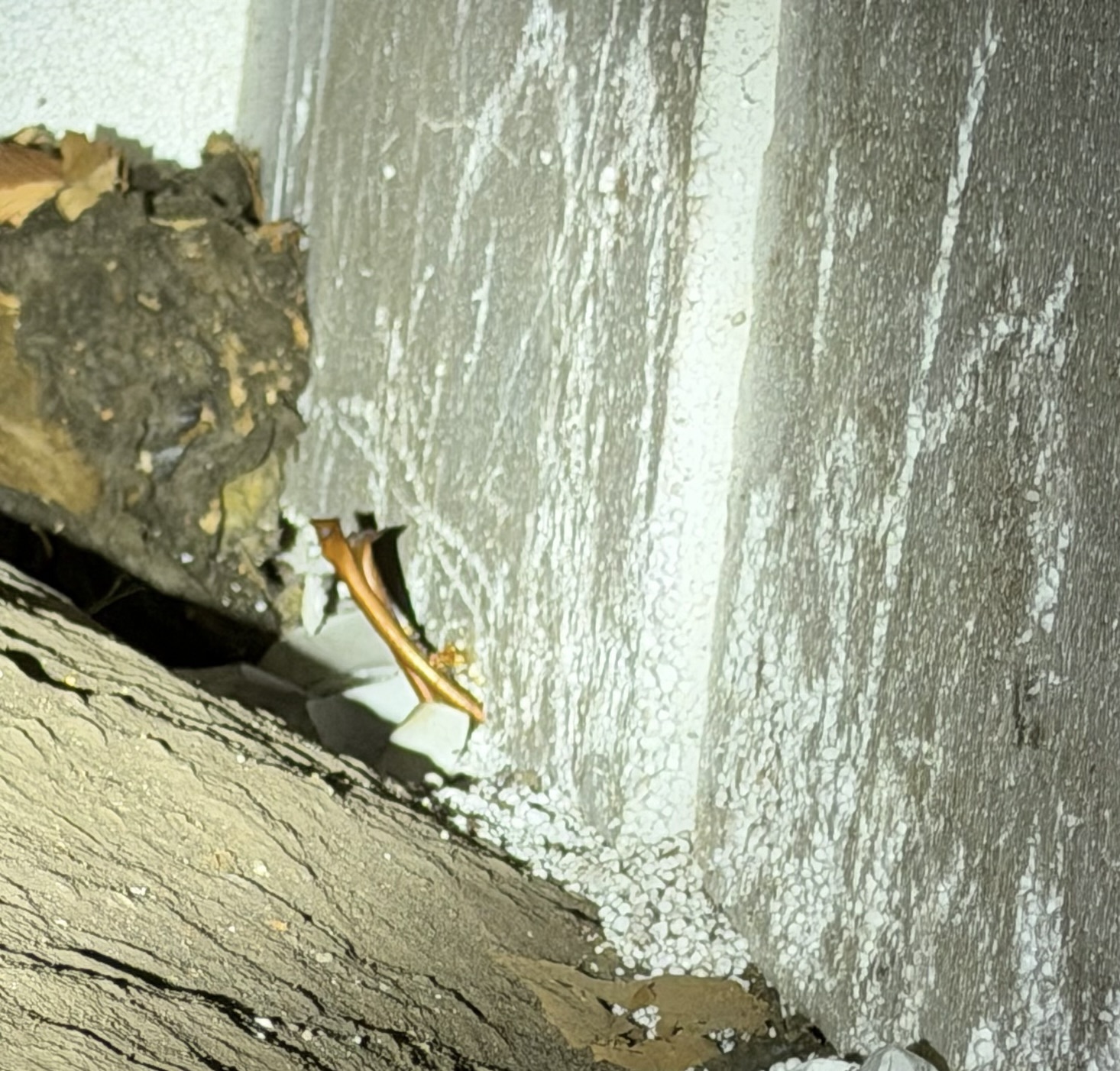
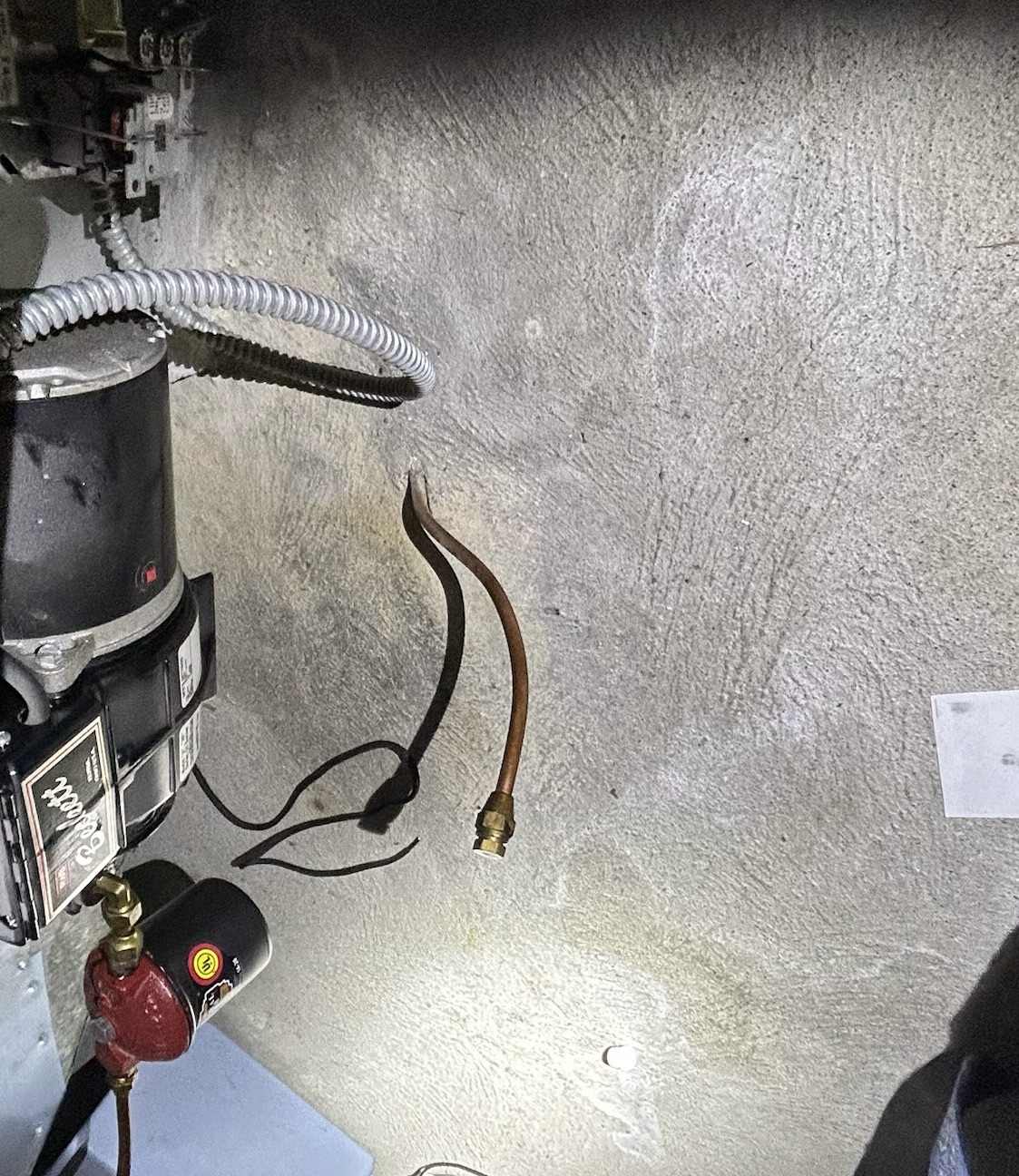
Inside the home, look for an old oil furnace that’s been decommissioned, capped fuel lines in the basement or crawlspace, or a boiler that’s been converted to gas or electric. Pre-1960s homes — especially those that haven’t been substantially updated — are the highest-risk category.
Cast Iron Fill Pipe
A short pipe sticking out of the ground in the yard, often near the side or back of the home, is one of the clearest signs of a buried tank.
Capped Fuel Lines
Old copper or iron supply lines that have been cut and capped in the basement or crawlspace often indicate a past oil heating system and a tank somewhere nearby.
Decommissioned Equipment
An old oil furnace or boiler that was converted to a different fuel source is a signal that the property may have had underground oil storage at some point.
Ground Indentation
Settling or an unexplained depression in the yard near the foundation can sometimes indicate a buried tank below, particularly in older properties.
Why It Matters: Insurance, Financing, and Liability
This is where buried tanks become a real estate problem — and it’s significant enough to stop a transaction entirely.
In BC, underground storage tanks are classified as material latent defects, meaning real estate licensees are required to disclose them. Lenders will not fund a purchase on a property with a known buried tank until removal is completed and documented. Home insurers across the CRD and broader Vancouver Island market are increasingly declining coverage or cancelling policies on older properties until professional removal is on record.
The liability exposure is serious. Under BC’s Environmental Management Act, responsibility for contamination can extend to the current owner regardless of when the tank was installed or whether they knew it was there. Oil contamination is explicitly excluded from standard home insurance policies — so if the tank leaks, the remediation cost falls directly on the homeowner.
The Saanich Rule — and Why Other Municipalities Differ
Regulations vary by municipality across the CRD, and it matters which one you’re buying in.
The District of Saanich is the only municipality in the greater Victoria region that requires inactive underground tanks — those out of service for more than two years — to be removed. Tanks rendered inactive with a Saanich Fire Department permit before May 26, 2014 are exempt from that requirement.
In Oak Bay, there is no mandatory removal requirement unless contamination is evident. The same is generally true in Esquimalt, Langford, Colwood, and the other CRD municipalities. Further north, Duncan, Ladysmith, and Nanaimo follow provincial standards under the BC Fire Code rather than stricter local bylaws.
That said, the absence of a local removal requirement doesn’t change the insurance and financing picture. Lenders and insurers operate on their own standards regardless of municipal bylaw. A tank that’s technically not required to be removed can still prevent a sale from completing if the lender or insurer won’t proceed without documentation.
What Removal Actually Involves
Removal scope and cost vary depending on tank size, location, accessibility, and whether contamination is found. A clean removal with no soil issues is a very different job than one where oil has migrated into surrounding soil or drainage. Either way, get a quote from a qualified tank removal contractor early in the process — ideally before subjects are removed so there are no surprises at completion.
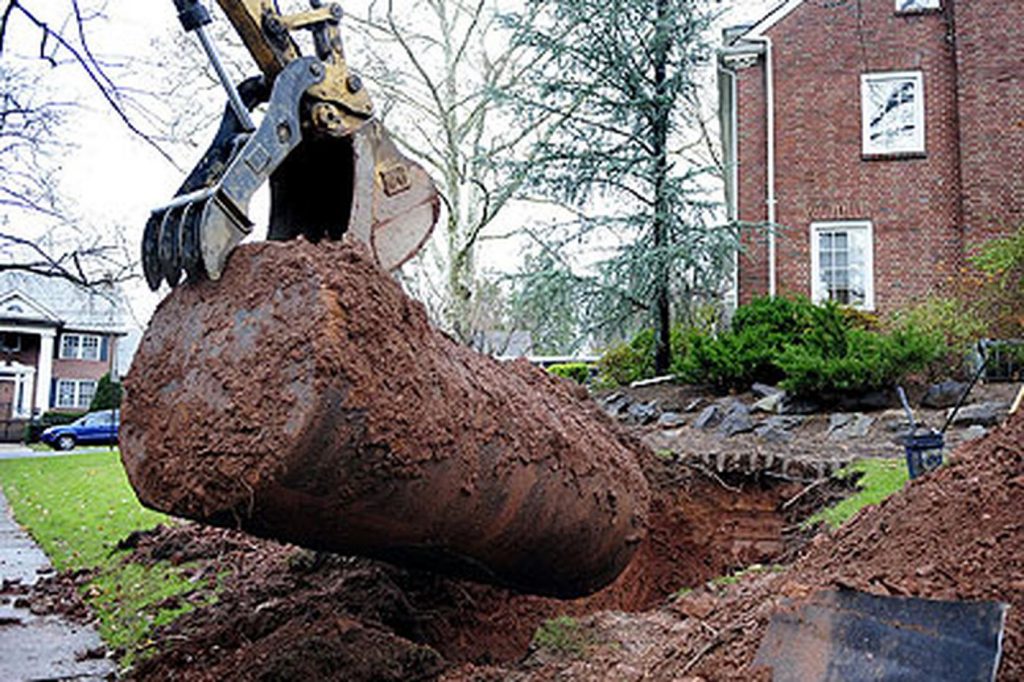
The contractor handles everything: permits, extraction, soil sampling, lab testing, and the final documentation package. That paperwork is what satisfies your lender, insurer, and future buyers — so make sure it’s included in any quote you get.
If contamination is found, costs can increase substantially depending on how far the oil has travelled. Remediation of a heavily impacted site is a significantly larger undertaking than a straightforward removal, which is exactly why early detection matters. There are qualified tank removal contractors serving Victoria, the CRD, the Cowichan Valley, and up to Nanaimo — getting a scan done before subjects come off is the right time to know what you’re dealing with.
Clean Removal
Tank extraction, soil testing, permits, and a full documentation package. The straightforward case when no contamination has occurred — and the outcome you want confirmed before completing a purchase.
Contaminated Site
If oil has migrated into surrounding soil, drainage, or groundwater, remediation becomes a separate and more involved process. The extent of contamination determines the scope of work required.
What Happens During a Home Inspection
A standard home inspection does not include ground-penetrating radar or a dedicated oil tank scan — that’s a separate specialist service. What a home inspection does include is a thorough visual assessment of the accessible areas of the property.
During inspections of older homes across Victoria, Saanich, Oak Bay, Esquimalt, the Western Communities, the Saanich Peninsula, the Cowichan Valley, and up to Nanaimo, I look for the physical indicators described above. When they’re present, they get noted in the report with a recommendation to arrange a dedicated oil tank scan before subject removal.
That scan is typically done with ground-penetrating radar by a qualified contractor and takes a few hours. It’s a straightforward, low-cost step relative to the risk involved. If you’re buying any pre-1960s home on Vancouver Island, adding it to your due diligence checklist is worth doing.
Realtor Insight
For realtors working with buyers on pre-1960s properties — whether in Victoria’s older neighbourhoods, the Saanich Peninsula, the Cowichan Valley, or Nanaimo — this is worth flagging early in the process. Discovering a buried tank after subjects are removed creates significant complications: lender conditions, insurance requirements, and potential renegotiation. Building a tank scan into the inspection conditions on older properties is a clean way to protect your clients and keep transactions on track.
Sellers with older properties should also consider proactively scanning and documenting before listing. A clean tank removal report — or documentation confirming no tank exists — removes a common friction point and gives buyers confidence going in.
The Bottom Line
Buried oil tanks are a well-established issue in older homes across Victoria and Vancouver Island. They show up from Oak Bay and Fairfield to Sidney, Duncan, and Nanaimo. Many are still in the ground, many current owners are unaware of them, and the consequences of discovering one after a purchase — or after a leak — can be significant.
With proper due diligence, this is a manageable issue. A scan before subjects are removed, combined with a professional removal and documentation package when a tank is found, resolves it cleanly and protects everyone involved.
It’s the kind of issue that’s much easier to deal with before possession than after.
Further Reading from Watchtower
- Top Home Inspection Red Flags in Victoria, BC
- 5 Costly Defects I Find in Victoria Heritage Homes Every Month
- Cast Iron Plumbing: A Critical Factor in Victoria Homes
- Aluminum Wiring in Victoria and Vancouver Island Homes
- Grading 101: The Simple Slope That Protects Your Home
Have Questions About an Older Home?
You don’t need to figure this out on your own. If you’re looking at a pre-1960s property anywhere on Vancouver Island and want to understand the inspection process or what to flag before removing subjects, feel free to reach out.
FAQ: Buried Oil Tanks on Vancouver Island
How do I know if my home has a buried oil tank?
Physical signs include a cast iron fill pipe in the yard, capped fuel lines in the basement or crawlspace, or a decommissioned oil furnace. A dedicated ground-penetrating radar scan by a qualified contractor is the definitive way to confirm whether a tank is present.
Does a home inspection cover buried oil tanks?
A standard home inspection is a visual assessment and does not include ground-penetrating radar. However, inspectors will flag physical indicators that suggest a buried tank may be present and recommend a specialist scan before subject removal.
Am I required to remove a buried oil tank in Victoria or on Vancouver Island?
It depends on the municipality. The District of Saanich requires removal of inactive tanks unused for more than two years. Most other municipalities on Vancouver Island — including Oak Bay, Esquimalt, Langford, Duncan, and Nanaimo — follow provincial standards and have no mandatory removal requirement unless contamination is evident. However, lenders and insurers typically require removal documentation regardless of local bylaw.
Can I buy a home on Vancouver Island that has a buried oil tank?
Yes, but lenders typically require removal and documentation before funding, and insurers may decline coverage until it is addressed. The standard approach is to make removal a condition of sale, with the seller responsible for completing the work and providing all required documentation before completion.
Which areas of Vancouver Island are most affected by buried oil tanks?
Buried tanks are most common in areas with significant pre-1960s housing stock. In the CRD, that includes Oak Bay, Fairfield, Rockland, James Bay, Saanich, Esquimalt, and older parts of Langford and Colwood. The issue also appears regularly in Sidney, North Saanich, Central Saanich, and further north in the Cowichan Valley — Duncan, Cobble Hill, Shawnigan Lake, Mill Bay — and in older Nanaimo neighbourhoods.
What does buried oil tank removal involve on Vancouver Island?
A qualified contractor handles permits, tank extraction, soil sampling and lab testing, and provides a final documentation package. That paperwork satisfies lenders, insurers, and future buyers. If contamination is found, additional remediation work may be required depending on the extent of oil migration.