
Why You Shouldn’t Store Heavy Items in Your Attic in Victoria & Vancouver Island Homes
Across Victoria and Vancouver Island, attics are often treated like convenient bonus storage. Structurally, many are not designed for that use. Excess storage can stress roof trusses, compress insulation, interfere with attic ventilation, and quietly contribute to bigger problems over time.
I see this more often than people expect during home inspections around Victoria, Saanich, Langford, Colwood, and the rest of Vancouver Island.
Someone uses the attic for bins, materials, or overflow storage because it looks like empty space. Then you get up there and start seeing bowed truss members, shifting connections, flattened insulation, and blocked airflow.
It looks practical at first. Structurally, it often is not.
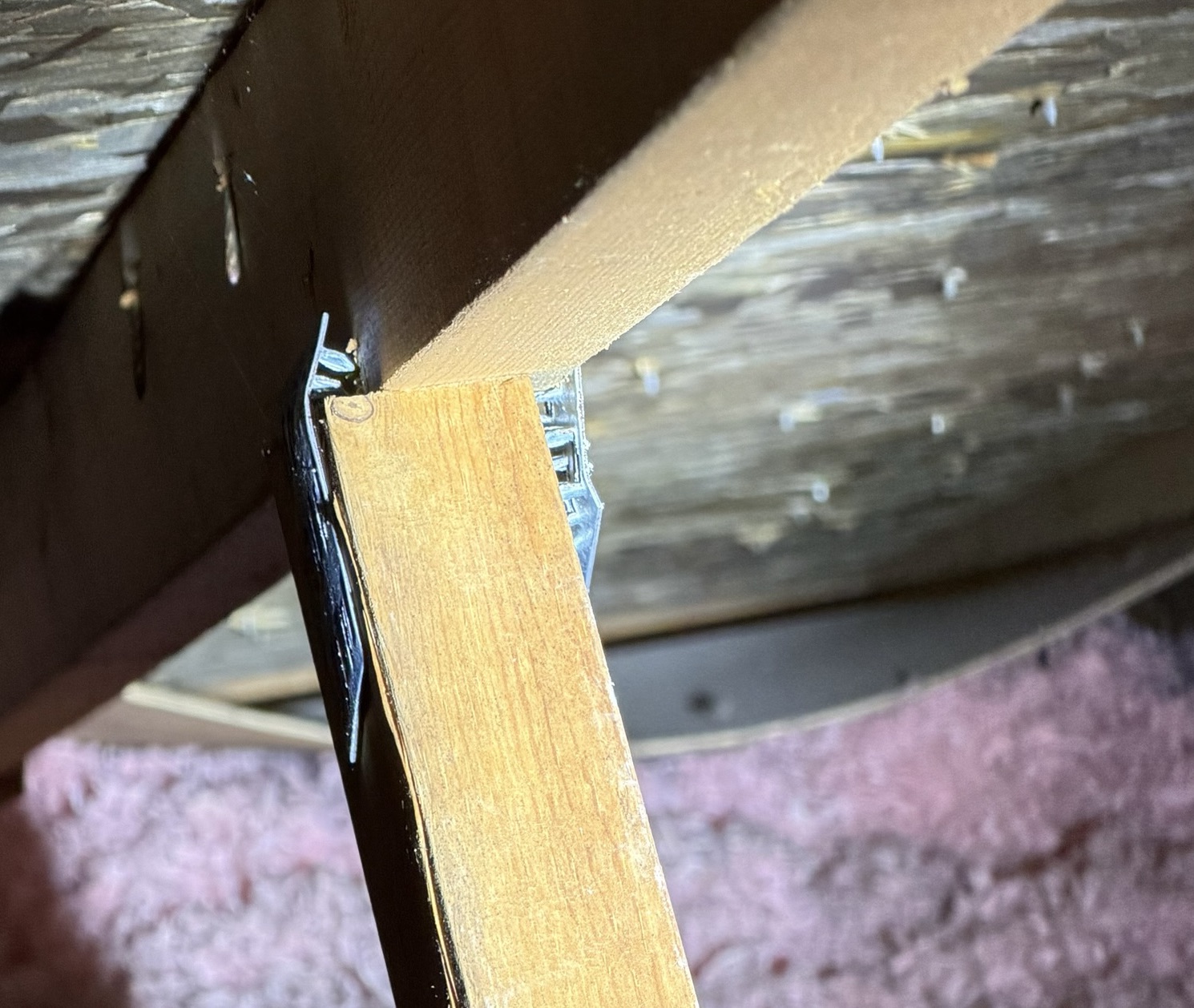
Why Attic Storage Is a Bigger Issue Than It Looks
Most homeowners are not trying to misuse their house. They are just trying to find space. And on the surface, an attic seems like a logical place to put seasonal totes, extra boxes, leftover flooring, or anything else that is not needed every day.
The problem is that many attic spaces in homes across Victoria and Vancouver Island were never designed to carry that kind of load. What looks like unused square footage is often part of a carefully engineered roof system. Once you start adding weight, compressing insulation, and blocking airflow, the attic can stop performing the way it was intended to.
This fits into the same category as many other top home inspection red flags in Victoria. It may not look dramatic at first, but over time it can become an expensive issue.
What’s Actually Above Your Ceiling
In many homes throughout Greater Victoria and the Island, the structure above the ceiling is made up of engineered roof trusses. These are not just random pieces of lumber nailed together on site. They are designed in advance, manufactured off-site in controlled conditions, and installed as part of a complete structural system.
Each truss is engineered around the span of the home, the geometry of the roof, and the loads it is expected to carry. That usually includes the weight of the roofing materials, expected snow loads, and wind forces. Every member in the truss has a job. The top chords, bottom chord, and web members all work together to move force through the assembly in a very specific way.
The metal connector plates at the joints are part of that design. They are pressed into place so loads can be transferred properly through the truss. When people start adding storage to the attic, they are often asking that system to carry weight it was never designed to support.
What Happens When Storage Gets Added
At first, there may be no obvious warning signs. Then gradually, changes begin to show up. Heavy or concentrated loads can cause truss members to bow, metal plates to lift or shift, and connection points to move out of their original alignment.
That matters because a truss works as a system. When one area is overloaded, the stress does not stay isolated there. It gets redistributed through the rest of the assembly. Once that load path changes, the truss is no longer working the way it was originally designed to.
Bowed or Deflected Members
One of the first signs can be truss members no longer sitting straight. Even subtle bowing can be a clue that added weight is affecting the structure.
Plate Movement
Steel connector plates can begin to lift or lose full engagement if the framing starts moving in ways it was never intended to.
Shifting Connections
Joints where members meet may begin to deviate from their original position. That is not just cosmetic. It is a sign of structural stress.
Compounding Stress
Once one part of the truss is overloaded, neighbouring members can start carrying force differently too. Problems rarely stay isolated for long.
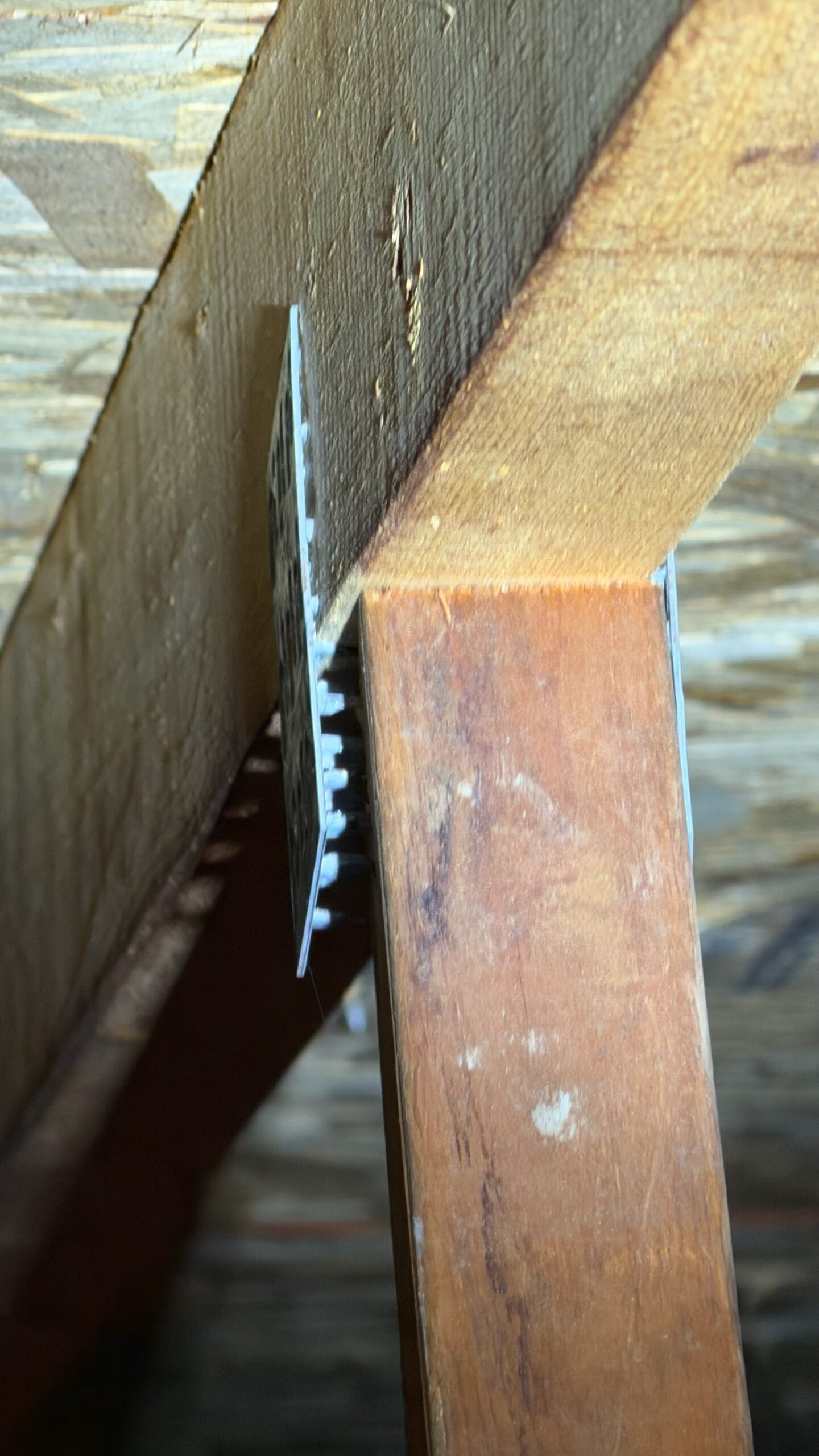
Storage Is Also Hard on Insulation
Attic storage is not just a structural issue. It can also hurt the home’s thermal performance.
Most attics in Victoria and Vancouver Island homes rely on insulation laid across the attic floor to slow heat loss. That insulation needs to stay fluffy and evenly distributed to do its job properly. When storage bins, plywood, or miscellaneous items get piled on top of it, the insulation gets compressed.
Compressed insulation loses effectiveness. That can contribute to heat loss, colder rooms below, higher energy bills, and an increased risk of condensation in the attic during colder months. This is similar to what happens when an attic hatch is poorly sealed or under-insulated. Small details at the attic level can have a real impact on comfort and performance.
Ventilation Can Be Affected Too
An attic also needs airflow. Proper ventilation helps remove moisture and regulate attic conditions through the seasons. When storage gets added carelessly, it can block soffit intake paths, restrict air movement, and create dead areas where moisture lingers.
That is where secondary issues can start to build. Reduced airflow can contribute to staining, damp sheathing, mould concerns, and premature wear on roofing components. Across the Island, where moisture management matters year-round, that is not something to ignore.
Just like gutters, downspouts, and drainage help protect a home from exterior moisture, attic ventilation helps protect it from the inside out.
Are Any Attics Actually Designed for Storage?
Yes, some are. But there is an important difference between an attic that can physically fit boxes and an attic that was actually designed for storage.
Where storage is intended, the attic typically has specific design features. These can include attic trusses or similarly engineered framing intended to support a storage load, a defined load rating, proper decking or a framed platform to distribute weight, and enough clearance to avoid crushing insulation or blocking ventilation pathways.
For light attic storage, rough design loads are often in the range of about 10 pounds per square foot. In some cases, storage areas may be designed for around 20 pounds per square foot depending on the intended use and the way the space was engineered. That does not mean every attic can carry that load. It only means some designated storage areas may be designed that way.
If there is no clear indication that your attic was built for storage, it is safest to assume it was not. Most standard roof truss systems in homes around Victoria and Vancouver Island are designed for the roof and environmental loads, not for general household storage.
Can a Truss Just Be Reinforced Later?
This is where people often get into trouble. Because trusses are engineered systems, they are not meant to be casually modified. Adding extra lumber, blocking, or braces in the wrong place can shift loads to other members and create new stress points rather than solving the problem.
If there are visible signs of movement, the first step is removing the extra load and getting a proper assessment where needed. Blindly trying to “beef it up” is not a reliable fix.
What Homeowners in Victoria & Vancouver Island Should Do Instead
- Treat most attic spaces as light-access areas only unless they were clearly designed for storage.
- Avoid heavy bins, spare flooring, tools, furniture, or concentrated loads in the attic.
- Keep insulation undisturbed and evenly distributed.
- Do not block soffit ventilation or airflow routes with stored items.
- Watch for bowed framing, shifting plates, or any sign the structure is moving.
- Use garages, closets, or other supported storage areas instead.
Even a quick seasonal look from the hatch can help. It is the same principle behind checking grading around your home or making sure drainage details are doing what they should. Small maintenance awareness goes a long way.
Realtor Insight
This is a useful one for buyers and sellers alike. An overloaded attic can create concern not just because of the structure, but because it raises questions about hidden movement, energy loss, and long-term maintenance. For Island homes where efficiency and moisture control already matter, it is one more area worth keeping simple and clean.
The Bottom Line
Across Victoria and Vancouver Island, I see attic spaces treated like storage rooms all the time. But in most homes, that space was never intended for that use. The roof framing may be engineered only for the roof and environmental loads, while the attic insulation and ventilation are meant to remain open and undisturbed.
Once extra weight gets added, insulation gets crushed, or airflow gets blocked, the attic can start underperforming in several ways at once. That is why what seems like a harmless storage habit can quietly turn into a structural, energy, or moisture issue over time.
It is much better to catch that early than to discover it after the framing has already started to respond.
Further Reading from Watchtower
- Grading 101: The Simple Slope That Protects Your Home
- Gutters, Downspouts & Drainage: Your Rainy Season Checklist for a Dry Home
- Aluminum Wiring in Victoria and Vancouver Island Homes
- Cast Iron Plumbing: A Critical Factor in Victoria Homes
- Manufactured Home Inspections in Victoria, BC
Seeing Something You’re Not Sure About?
You do not need to diagnose your own attic. You just need to notice when something looks off. If the space is being used for storage, or if the framing, insulation, or ventilation looks compromised, it is worth taking a closer look sooner rather than later.
FAQ: Attic Storage in Victoria & Vancouver Island Homes
Are most attics in Victoria homes designed for storage?
Usually not. Many attic spaces are framed with engineered roof trusses designed for the roof and environmental loads, not general storage. Unless the attic was specifically designed and rated for storage, it is safest to assume it was not intended for that use.
Can attic storage damage roof trusses?
Yes. Excess or concentrated weight can contribute to bowing, shifting connections, and movement at metal truss plates. Because trusses work as a system, one overloaded area can affect the rest of the assembly.
Does attic storage affect insulation and ventilation too?
It can. Stored items can compress insulation, reducing thermal performance, and they can also interfere with attic airflow, especially near soffits. That can contribute to heat loss, condensation, and moisture problems over time.
What kind of attic is designed for storage?
Storage-capable attics are typically built with framing specifically engineered for that use, a defined load rating, and a layout that preserves insulation and ventilation. Rough design loads for light storage may be around 10 pounds per square foot, and sometimes around 20 pounds per square foot, but only where the space was intentionally designed that way.